
From dense forest to grassy savanna to volcanic desert—discover the spiritual lessons and profound reflections inspired by Mount Cameroon’s diverse vegetation during a transformative ascent.
From the Highest Point of Central and West Africa: The Multiple Expressions of Life in the Vegetation
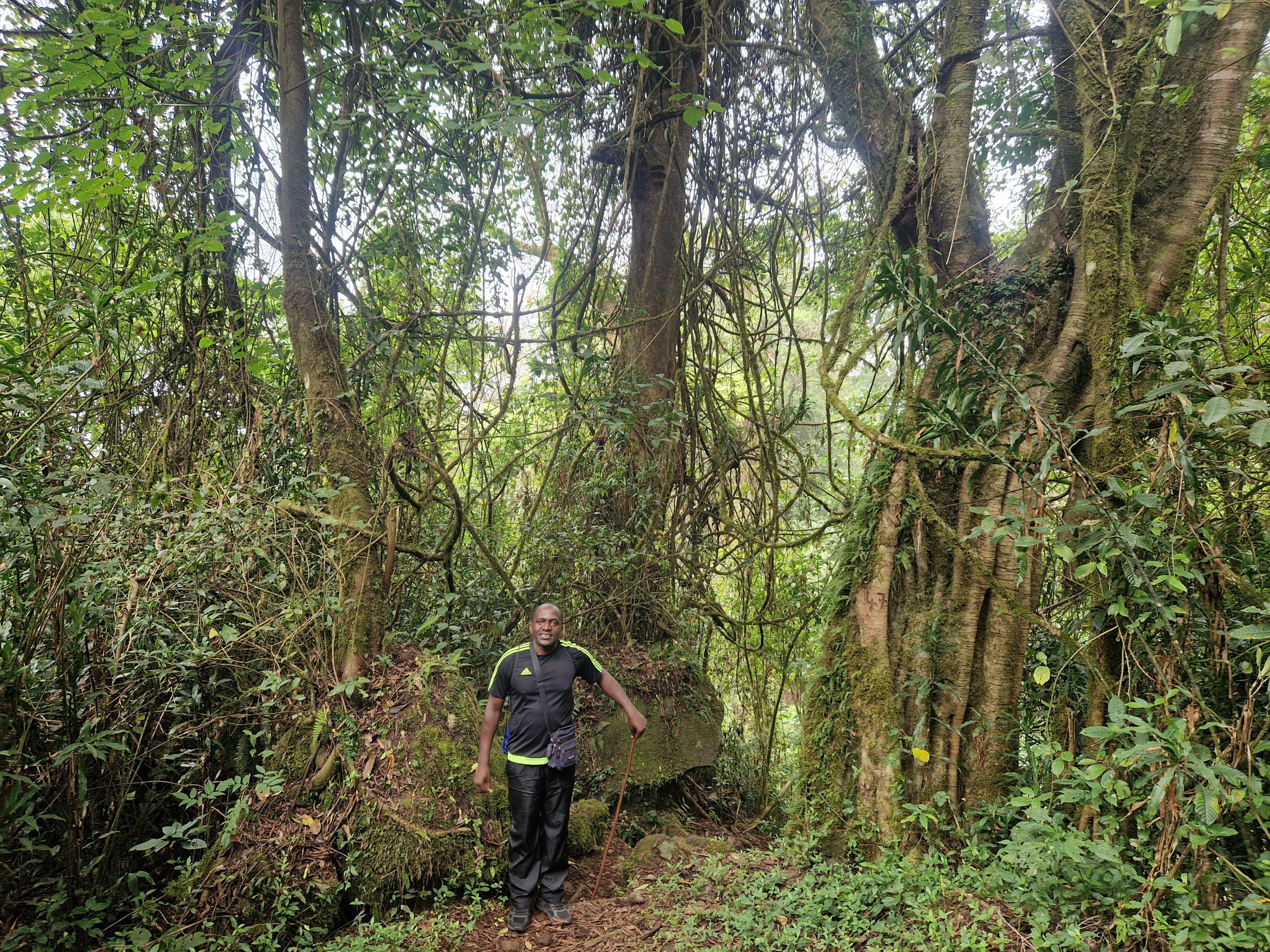
During my ascent of Mount Cameroon, the first place that caught my attention was the forest. Just after leaving the last houses of the city of Buea, we entered a dense, majestic forest.
A forest of towering trees, hanging vines, and thick undergrowth—a place with a magical atmosphere. In a few words, a beautiful forest where one can hear rare birds blending their melodies with the surrounding silence.
In this forest, I saw—everywhere and in great number—the trees of peace. The sight of these trees, in their various shapes and sizes, invited me to meditate on peace. Yes, this mountain calls for peace; it speaks of peace through its vegetation.
I responded to this invitation by praying for peace in Cameroon, in Africa, and throughout the world—especially where conflicting interests threaten and destroy life.
The Grassland Savanna: An Invitation to Perspective
The second landscape that drew my attention was the herbaceous savanna. Step by step, I realized that I was leaving the forest and entering a vast expanse of open land.
The view extended for kilometers. On both sides, wide stretches of savanna—grasses of all kinds covering the visible surface of the mountain. Birds became rare. Silence dominated. And above us, a perfectly blue sky.
Here, the vegetation invited reflection, a widened perspective—an invitation to look far, to see the mountain’s contours, and to contemplate the forest now lying behind us.
The Desert Zone: Beauty in the Absence of Life
Higher up came the third striking landscape: the desertic zone.
The grasses became increasingly scarce. Birdsong vanished. The soil turned dry and arid. On both sides stretched the same color of cooled volcanic magma. Mount Cameroon is still an active volcano, and the upper part of its soil is composed of dark, porous volcanic rocks—pouzzolane—resulting from past eruptions. The most recent eruption occurred at the turn of the millennium.
This treeless, grassless desert revealed strangely beautiful shapes and landscapes. From this height, one can look down and see the clouds lying below. Beneath those clouds lie the city of Buea, the forest, and the savanna.
This upper zone is the realm of cold and wind. Here, the mountain invited me to lightness and presence. The city, the forest, and the savanna were hidden beneath the clouds.
I prayed for the peoples who live in desert regions. I also reflected on the wisdom that such environments of external scarcity teach us: that life is greater than everything we can encounter along the journey.
Embracing the World Through a Mountain
Through my ascent of Mount Cameroon, I embraced the entire world:
- the Atlantic Ocean, where the mountain begins,
- the forest,
- the savanna,
- the desert,
all coexisting without contradiction, without conflict.
God chose this mountain as a place where life expresses itself in plurality—in harmony and abundance.
I believe that a pilgrimage to this mountain should be recommended to all who seek to serve the common good. Plurality is not a threat—it is a gift, a chance for the fullness of life for all.
And you—have you ever had an experience where nature revealed deep lessons to you?
Share it with us in the comments.
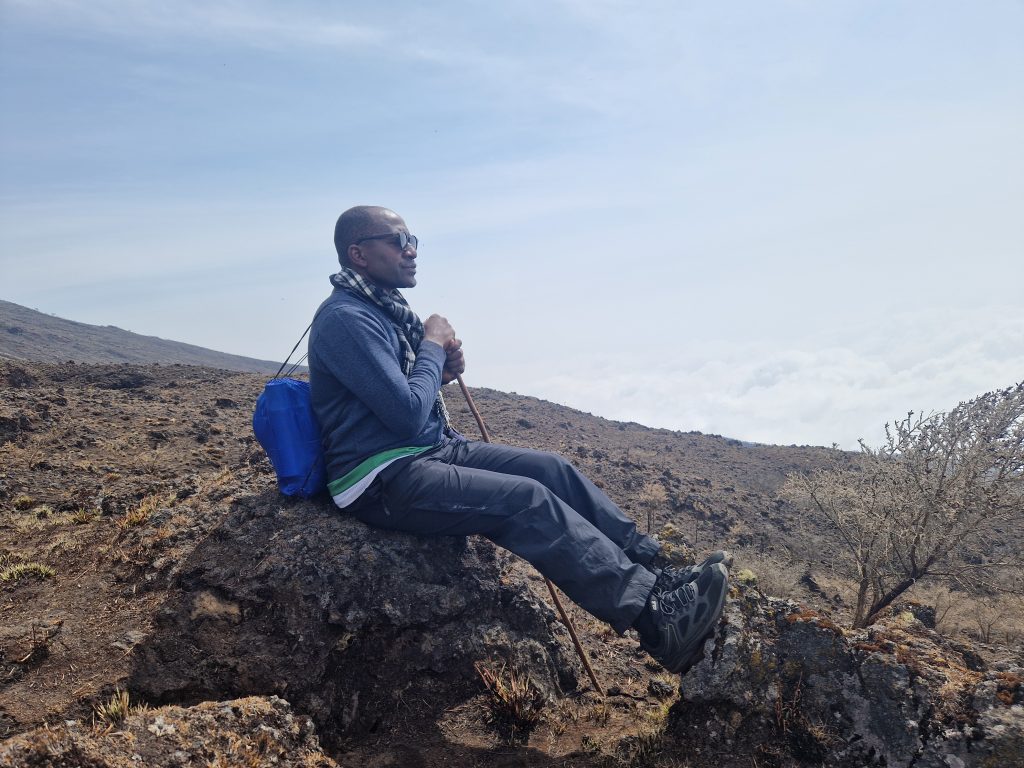
There is something unique about climing a big mountain, one has to be light yet not lacking the necessary!