
Discover how the Bamiléké people of Cameroon understand and name God. This article explores the meaning of “Si,” cultural implications, and the deep connection between God, truth, and the land.
God among the Bamiléké: The Name of God and Its Implications
Today, I begin a series of blog posts on the understanding of God within the worldview of the Bamiléké people in western Cameroon.
Right from the start, I would like to set two guiding principles that will help us navigate this exploration.
The first principle is the awareness that speaking about God is a sensitive topic. This calls for approaching the subject with respect. This respect is even more important today, as recent history has shown attitudes of disregard toward the relationship the Bamiléké people have with their beliefs.
The second principle is the recognition that we do not know everything about God. This calls for an attitude of humility and openness to learning. I will not adopt the tone of someone claiming clear and absolute knowledge. I will simply bear witness to what I have seen and heard. Others may offer different testimonies, and I hope all these perspectives will complement one another.
What is the name of God among the Bamiléké peoples?
I was born in Bandjoun, and in Ghomala’, we call God: “Si.” Depending on the sentence, the tones may vary. I am not aware of a plural form for this reference to God. The word “Si” also means the ground on which one stands, the down as opposed to the up.
In several villages, there are nuances in the name of God, using adjectives or expressions to add titles or praise Him. In all cases, God among the Bamiléké is located below and not above. The sky in Ghomala’ is called “Kèbeng,” a word that refers to rain—not to God.
The first implication I learned from the name of God is that there is only one God. This one God is invoked depending on the locality. Thus, one might hear of the God of Bandjoun, the God of Baham, or the God of Dschang—without implying the existence of many gods. It is the same God invoked in different places. And even within a single locality, He is invoked in different sanctuaries and within different families.
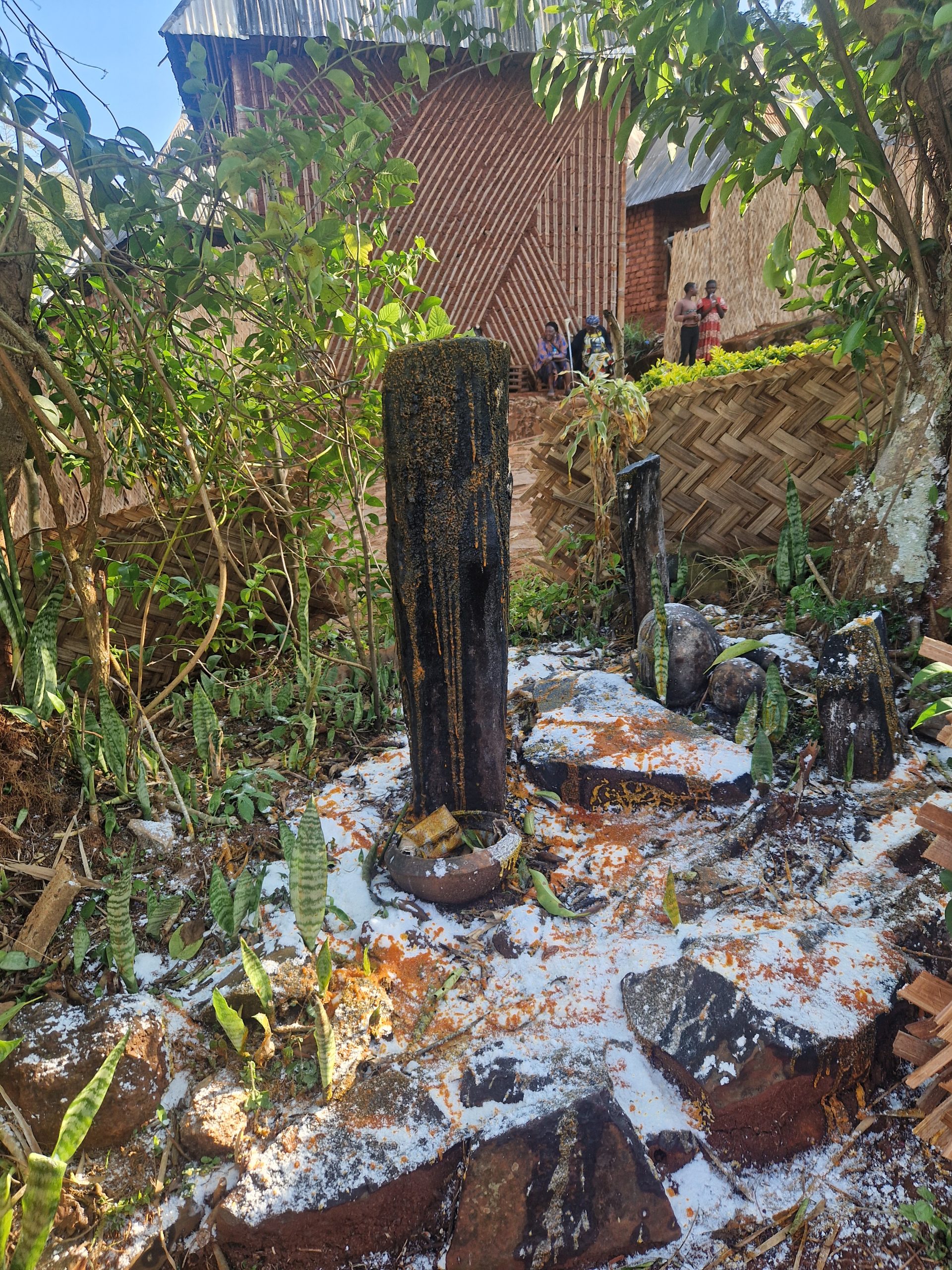
The second implication I learned is that one cannot be separated from God. The name of God is synonymous with the ground upon which one stands. It is on the ground that one swears by the name of God, and it is on the ground that sacrifices are offered to God.
I remember, when I was very young in the village, that to assure friends that what we were saying was true, we would swear in the name of God. The gesture was highly significant: one had to bend down, draw a line on the ground with a finger, stand up, lick the finger used to trace the line, and say: “In the name of God, what I say is true.” It was the strongest possible proof of the truth of one’s words or promise.
And you—what is the name of God in your language? What does that name mean?
It’s important to know our history to make sure we give credit where credit is due!