
Discover how Bamiléké children learn the foundations of wealth through the symbolic collection of peanut shells called Magessam, blending hard work, providence, and cultural wisdom.
Initiation into Wealth in Bamiléké Country: It All Begins with Peanuts
In my previous article, I spoke about the art of practicing social justice through the marketplace, something I learned in Ta Defo’s school. Today, I would like to talk about a central subject in the initiation of every Bamiléké child: the initiation into wealth, which begins as early as possible and in an almost natural way.
The Meeting Point Between Work and Luck
In the Bamiléké worldview, wealth is found at the point where hard work meets the free generosity of providence. This combination is built into the daily life of every Bamiléké child so that they learn to rely on rigor and endurance in well‑done work, without falling into the pride of believing that everything depends solely on them.
On the other hand, this combination teaches the child to believe in providence without folding their arms and waiting for it to act on its own.
How does Bamiléké culture manage to integrate such a delicate balance into the initiation of children?
The answer may surprise you: through peanuts.
Peanuts: The Secret of Bamiléké Fortune
There are many anecdotes circulating about wealthy Bamiléké people who became rich by selling peanuts. In reality, the relationship between the Bamiléké and village peanuts runs much deeper.
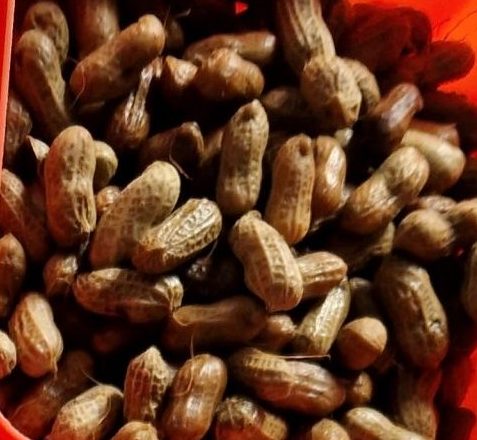
Village peanuts generally contain two seeds in a shell. Sometimes a shell contains only one seed. Shells with one or two seeds are considered ordinary.
The extraordinary shell—the one regarded as the mother of wealth—is the one that contains three seeds. It is seen as a gift of providence, and this kind of luck smiles randomly upon those who work.
During the harvest, children are allowed to set aside all three‑seed shells. In Ghomala’, these are called Magessam, a term that can be translated as excellence. The faster a child works, the greater the chance of finding a large number of Magessam. Sometimes adults also encourage children by giving them the Magessam they find.
At the end of the workday, each child carefully dries their Magessam in a specific place in the granary, making sure the seeds are well dried and protected from mice and other rodents.
It is these seeds which, through a kind of alchemy known only to Bamiléké mothers, will later become the child’s first chicken. That chicken will eventually be converted into a goat, which will make possible the opening of the first trading counter, and so on.
In tomorrow’s article, I will explain how this alchemy works. It is very simple, but one needs to know it and apply it according to the rules of the art.
And you, what is the secret of wealth in your culture?
#AfricanCulture #BamilékéTraditions #Bandjoun #Afrijohn #Ubuntu #WealthCreation #AfricanWisdom #CulturalIdentity #TraditionalEconomy #Magessam