

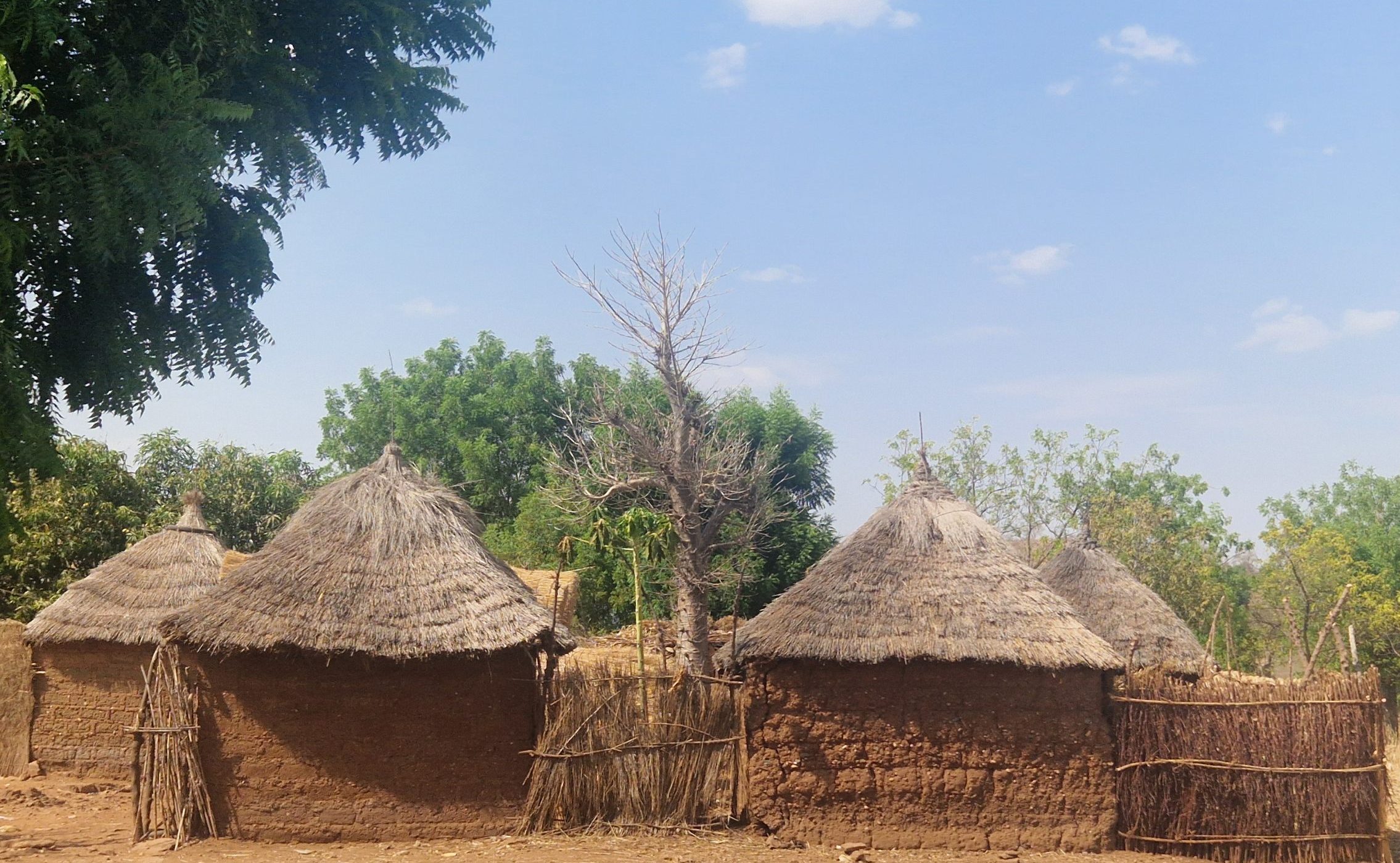
Discover how Ta Defo’s forge in Bandjoun served as a true school of life for Bamiléké children—teaching discernment, endurance, confidence, and traditional craftsmanship.
Initiation at Ta Defo’s Forge: A True School of Life
When I think back to the moments that shaped my childhood in Bandjoun, my memory goes straight to Ta Defo’s forge. It was there that I experienced some of my happiest and most formative moments as a child. Ta Defo initiated us not only into the art of blacksmithing but also into the art of living. His forge was a true school of life—comprehensive, demanding, and deeply human—where we learned the essential pillars of becoming responsible men.
- Discernment
Ta Defo taught us how to discern. With a single glance at a piece of iron, he could determine whether it was suitable for making a hoe, a machete, a planting tool, or a small knife.
Watching him weigh the metal in his rough hands, pause, and decide—without a single word—taught us how to make good decisions.
Discernment was crucial when deciding whether to continue hammering heated metal or return it to the fire. One beginner’s mistake could easily burn the palms. Knowing when to strike the iron and when to stop was a priceless lesson.
Discernment also led to flexibility. Sometimes, midway through shaping an object, Ta Defo would realize the metal wouldn’t be strong enough. Without frustration, he simply adapted and transformed it into something else—another powerful life lesson.
- Process and Progression
Everyone had a place in Ta Defo’s forge. The youngest children began with simple tasks, such as gathering small twigs to rekindle the fire hiding inside a large tree trunk.
Over time, and with Ta Defo’s encouragement, they learned to organize the finished tools, then progressed to mastering the art of blowing the fire.
This delicate skill required shaking two wooden rods connected to a long pipe that pushed air into the fire. Only after mastering these steps did we begin shaping small objects from iron scraps he gave us.
Each stage of learning mirrored life itself: patience, discipline, humility, and gradual mastery.
- Endurance
The forge demanded strength and stamina. Everything was done by hand.
Blowing the fire required physical endurance to maintain a steady rhythm. The most demanding task came when the iron was glowing red. We had to move quickly—lifting it from the fire, positioning it on the anvil, and striking it rhythmically with a hammer before it cooled.
Hammering the metal required a balance of:
- strength,
- coordination,
- and precision.
It wasn’t just about hitting; it was about shaping—little by little—something meaningful.
- Confidence
The entire forging process built deep confidence. First, self‑confidence, believing we could accomplish the task entrusted to us. But also trust in the master—our mentor, Ta Defo.
His trust was the true treasure. We felt immensely proud when he entrusted us with a responsibility. The ultimate mark of trust was when he chose one of us to accompany him to the market to sell the forge’s products.
The market was another school altogether:
- negotiating prices,
- presenting tools to clients,
- selling,
- and reporting earnings.
I will dedicate a full article to one of those unforgettable market days with Ta Defo.
Now, as an adult, I can say with gratitude:
The forge forged the man I have become.
And You?
Did you experience an initiation into a trade or skill during your childhood?
Share your story with us!
#AfricanFamily #ChildhoodInAfrica #NewbornTraditions #FamilyValues #CommunitySupport #VillageLife #IntergenerationalWisdom #RaffiaCulture #TraditionalCrafts #SustainablePractices #HeritageSkills