
Discover how Bamiléké children learn responsibility and wealth‑building—from saving three‑kernel peanuts (magessam) to raising a first hen—through community wisdom, care, and relational economy.
Initiation into Wealth among the Bamiléké people : From Peanuts to the Chicken
In my article yesterday, I indicated that peanuts with three kernels in the shell—magessam—are later transformed into a child’s first chicken, under the supervision of the mother.
Wealth Is the Fruit of a Web of Relationships
The Bamiléké do not know the idea of a “self‑made man.” The social logic is rather as follows: “I become someone necessarily through other people who enable me to become someone.” In this logic, the peanuts gathered and carefully dried by the child are offered as a prestigious gift to an uncle, an aunt, or an adult connected to the family. This adult, in appreciation for the prestige received from the child, gives back a few coins. The child then gives this money to his mother, who serves as treasurer.
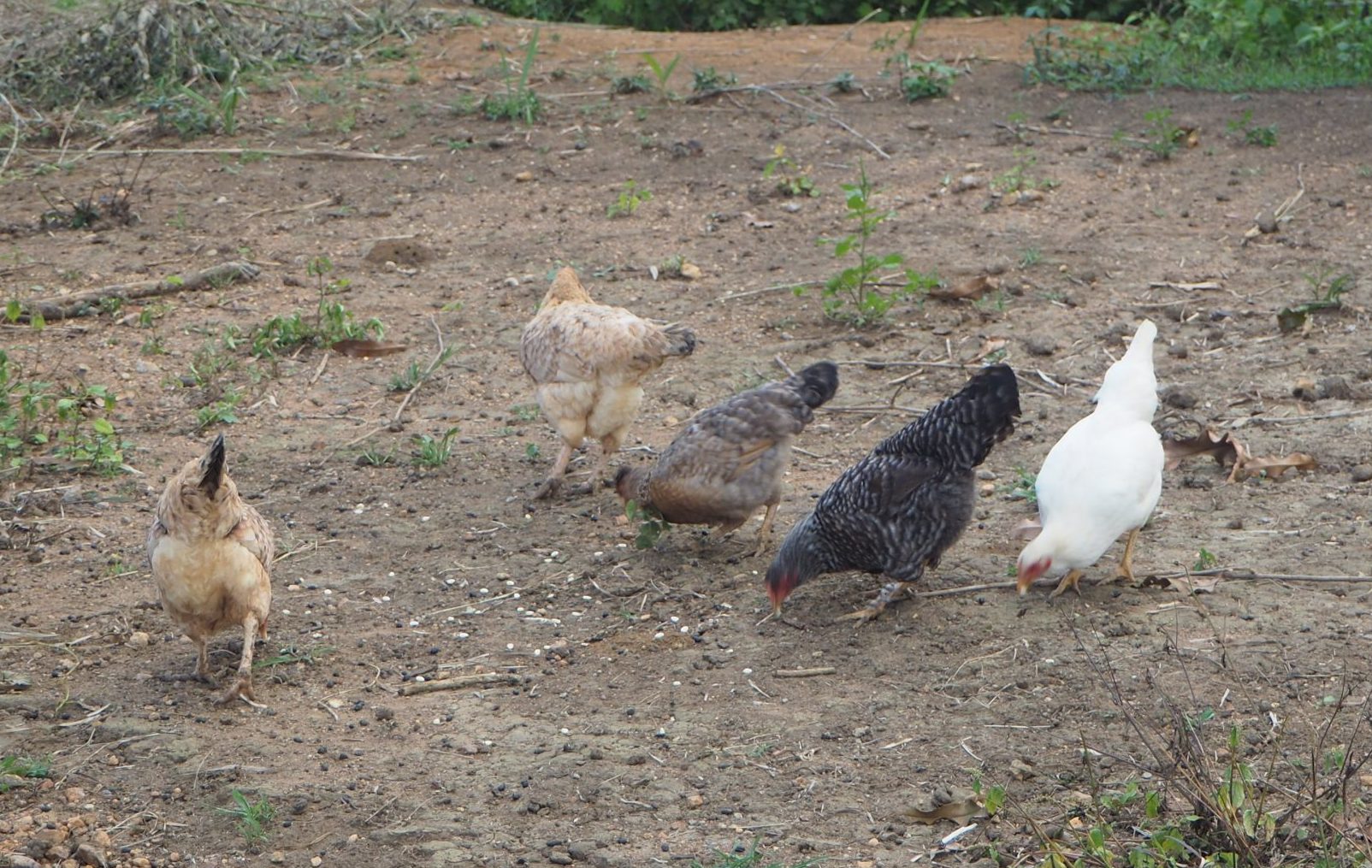
For a time, the child receives money from close relatives for his Magessams, as well as from selling other produce he may collect from the fields—such as kola nuts and avocados that have fallen to the ground. When the money thus collected is sufficient to buy a chicken, the mother goes to the market with the child to buy a small hen. The term is clear: a hen and not a rooster. That is how the magessam is transformed into a chicken.
Wealth Is the Fruit of Care and Attention
As the child grows, he takes care of his chicken with meticulous attention. He knows when to feed it, how to find it if, in the evening, it is not at home, and so forth. When the hen is large enough, the child brings it to where there is a rooster for fertilization. He must then remain vigilant to protect the hen’s eggs against snakes that swallow them and dogs that eat them. After 21 days of brooding, the child begins to protect the chicks from sparrowhawks and checks around their eyes to detect fleas. Little by little, the number of chickens increases until the next phase is prepared—the passage from the chicken to the goat.
A Pedagogy of Responsibility
This blend of care and attention nurtures in the child a sense of responsibility. For wealth to grow, one must be responsible for what one possesses. Very early on, one can detect among children those who allow themselves to be taken by laziness or by shortcuts.
Community wisdom, aware of this, has set prohibitions: for example, children must not eat three‑kernel peanuts. And what if a child hides to eat them? Community wisdom says that if a child hides to eat Magessam, his eye will swell. Now, since no child wants to have a swollen eye, he must keep his Magessam to give it to an adult—whose eye will not swell if they eat it.
Another example: children are not allowed to cook eggs. Children may eat eggs when an adult gives them to them. Community wisdom says that if a child cooks eggs and eats them, he will become a thief. And since no child wants to become a thief, he does not touch eggs—even those from his own hen.
These prohibitions taught by community wisdom are guiding markers that help the child build personality, develop a sense of responsibility, and practice self‑control—the indispensable conditions for building wealth.
How is responsibility cultivated among children in your culture? Share your community’s wisdom in the comments.
#Afrijohn #BamilékéTraditions #AfricanCulture #CameroonHeritage #CulturalWisdom #IndigenousKnowledge #WealthBuilding #ChildhoodInAfrica #CommunityValues #Ubuntu