


Discover the symbolic richness of Maasai attire—from identity and beauty to practical efficiency—through a personal initiation experience among one of Africa’s most iconic peoples.
My Initiation Among the Maasai: Clothing Rich in Symbols
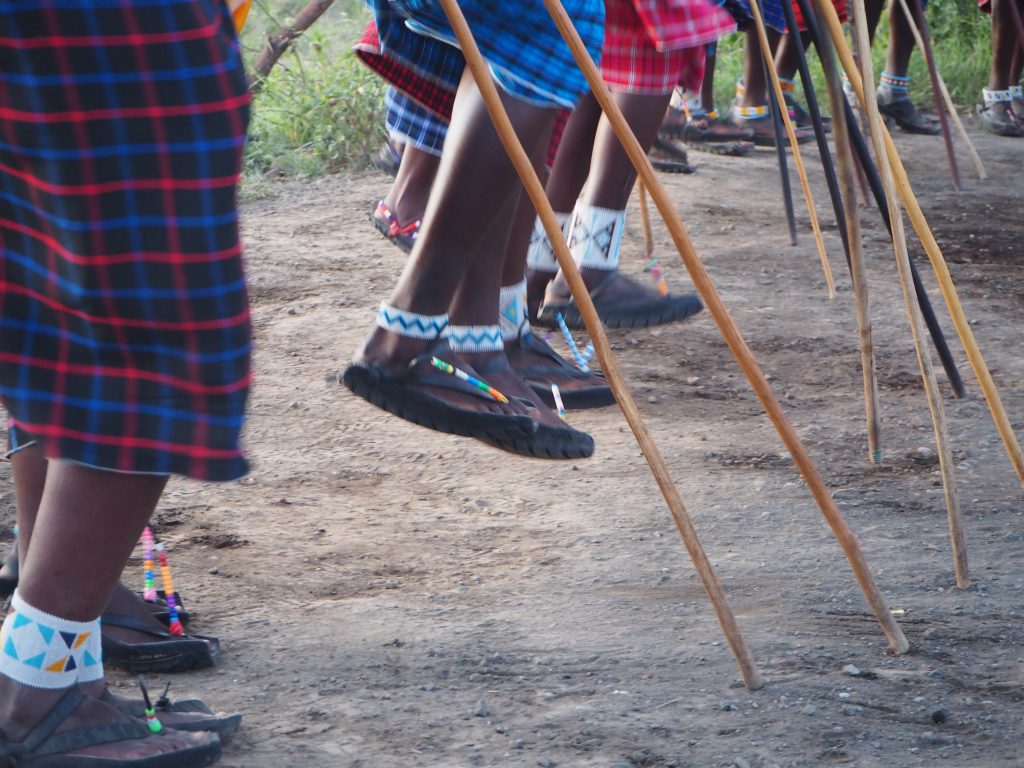
In the summary I shared yesterday about my initiation day among the Maasai, I mentioned that everything began with dressing. The elements that make up Maasai attire are: three pieces of cloth; Maasai sandals; necklaces worn around the neck, wrists, and ankles; the hip knife; and the staff.
In my view, this distinctive attire expresses three symbolic characteristics of this remarkable people: identity, beauty, and effectiveness.
An Identity-Bearing Attire
A Maasai can be recognized by his clothing.
In a plural society like Tanzania, it is not difficult—even from a distance—to identify a Maasai, because he expresses his identity visibly through his attire. By wearing his traditional dress, the Maasai is not imposing himself; he is simply accepting himself and affirming who he is.
Attire of Great Beauty
My initiator told me that in earlier times, Maasai clothing was made from dried animal hides. It was with the hide of an animal from their own herd that Maasai men covered their bodies and made their sandals.
Today, animal hides have been replaced by woven cotton or wool fabrics displaying checkered patterns. The combination of one piece of fabric in a different color with the others creates a striking and beautiful contrast.
To these fabrics, we must add the sandals, which are now made from recycled motorcycle tire rubber. The front of the sandal is raised with a strip of rubber decorated with colorful beads.
Around the neck and the waist, Maasai men enhance the beauty of their attire with multicolored, hand‑woven bead necklaces of exceptional craftsmanship. The same beauty is found in the multicolored bracelets they wear on their wrists and ankles.
Maasai women have clothing partly similar to that of men; however, their beadwork and necklaces are more elaborate and detailed.
An Efficient Attire
People rarely speak about efficiency when discussing clothing. But my experience with the Maasai made me understand that clothing can indeed be effective—when it allows the wearer to adjust to the ever‑changing conditions of daily life.
Maasai wisdom lies in wearing pieces of cloth that are not sewn together, allowing them to adapt to temperature changes throughout the day:
- Early in the morning, when it is cool, they wrap themselves to stay warm.
- In the heat of the afternoon, they adjust the fabric to allow ventilation.
Two elements greatly enhance this efficiency: the knife at the hip and the staff. These serve as both tools and protection. Faced with an opportunity on the path or a threat, the Maasai knows how to rely on either his knife or his staff.
And You?
Does clothing carry meaning in your culture? Share your experience in the comments.
#Afrijohn #AfricanCulture #MaasaiTraditions #CulturalIdentity #InitiationRites #SymbolicClothing #EastAfrica #IndigenousKnowledge #CulturalWisdom #HeritageAndIdentity