
Among the Bamiléké of Cameroon, every place can become a meeting point with God. Discover the diversity of sacred spaces—from family sanctuaries to natural sites marked by God’s presence—and the criteria that define them.
God among the Bamiléké: The Flexibility and Diversity of Sacred Spaces
I begin this article by recalling that among the Bamiléké, the word “Si” means both God and the earth beneath our feet. This homonymy is not incidental: it expresses the belief that every place is a potential space of encounter with God.
In the family home, in the fields, under trees, on rocks, near streams, on mountains—everywhere, one may approach God.
However, it is important to note that there are two additional categories of places specifically dedicated to offerings made to God:
- Places prepared by human beings
- Places prepared by God Himself
- Sacred Spaces Prepared by Humans
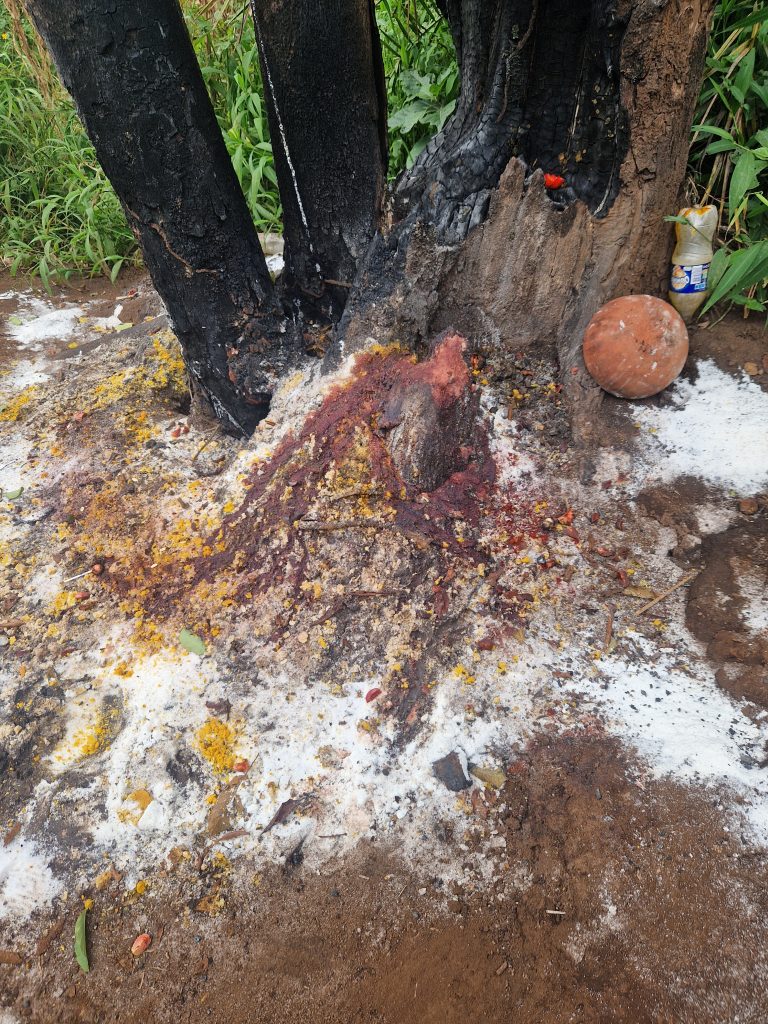
These are family sanctuaries, found within every compound. These sanctuaries are generally meant for offerings made by members of the extended family. The head of the family presides over the sacrifices made in such a sanctuary.
When speaking of a sanctuary, do not imagine grand structures. The elements of a typical sanctuary are generally the following:
- A tree called “Yam” in Ghomala’ — a tree that keeps its foliage even in the dry season. It is not a fruit tree and reproduces by cuttings.
- A herbaceous plant called “Fue keng,” commonly referred to as the tree of peace — a highly resilient plant, fruitless, and one that grows the most in difficult conditions.
- Stones, symbolizing solidity and stability.
- Depending on the compound, other elements may also be present.
The fact that a sacred space has been set up does not automatically mean that God has accepted it. This is determined by observing what happens to the offerings made there.
As a proverb from our community says:
“One does not stop God to confine Him in a sanctuary.”
- Sacred Spaces Prepared by God
These are places where humans perceive God’s presence because they contain something extraordinary:
- Exceptional Rock Formations
Such as the Fovu rock in Baham. For generations, people have come to this place as a site of communion with God. The abundance of offerings found there testifies to its sacred significance.
- Waterfalls
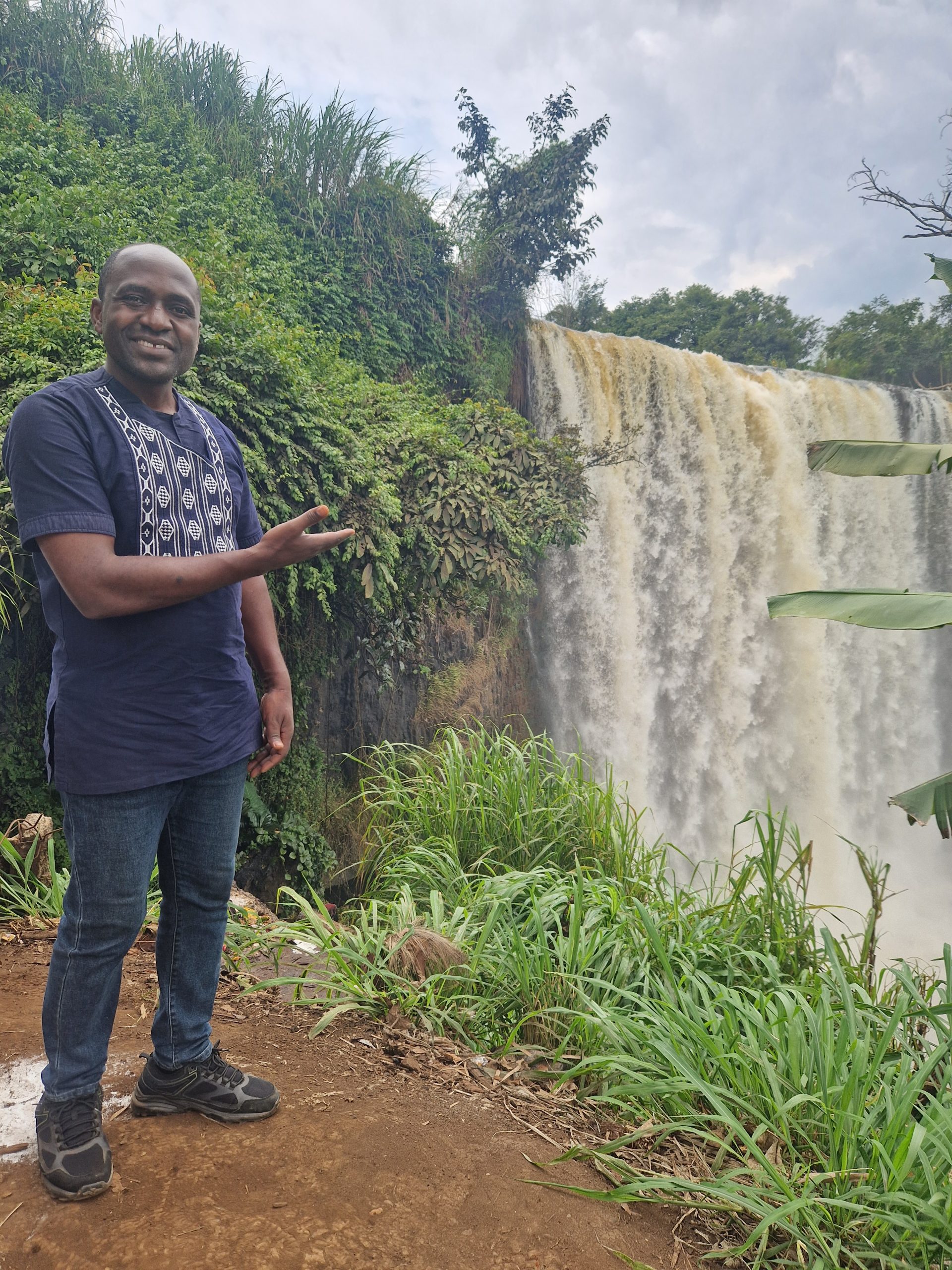
Like the Metché Waterfall in Bafoussam. Nature has endowed this site with exceptional beauty. It holds deep meaning for the many people who come to offer sacrifices there.
- Great Trees
For example, the large sacred tree of the Tse chiefdom in Bandjoun.
Humans recognized it as a special sign of God’s presence.
I remember that when we went to work in the fields, we would pass under this tree. As soon as we reached the area covered by its branches, we kept complete silence until we passed the entire span of its shade.
Another interesting aspect: this tree was a community safe zone. One could leave objects of any kind—bicycles, farming tools, even harvested crops—at its foot, and no one would steal them.
The tree under which God’s presence was felt also served as a guardian for the entire village community.
Do you know the criteria used in your culture to identify places where the presence of God is felt?
Share your insights in the comments.
A genuine relationship with God is that which brings unity and not division!