
A vivid exploration of the nutritional wisdom of Maasai herders—water, milk, and blood—as learned during an initiation day walking with the herd under the East African sun.
My Maasai Initiation Day – Step 3: Lunch in the Bush
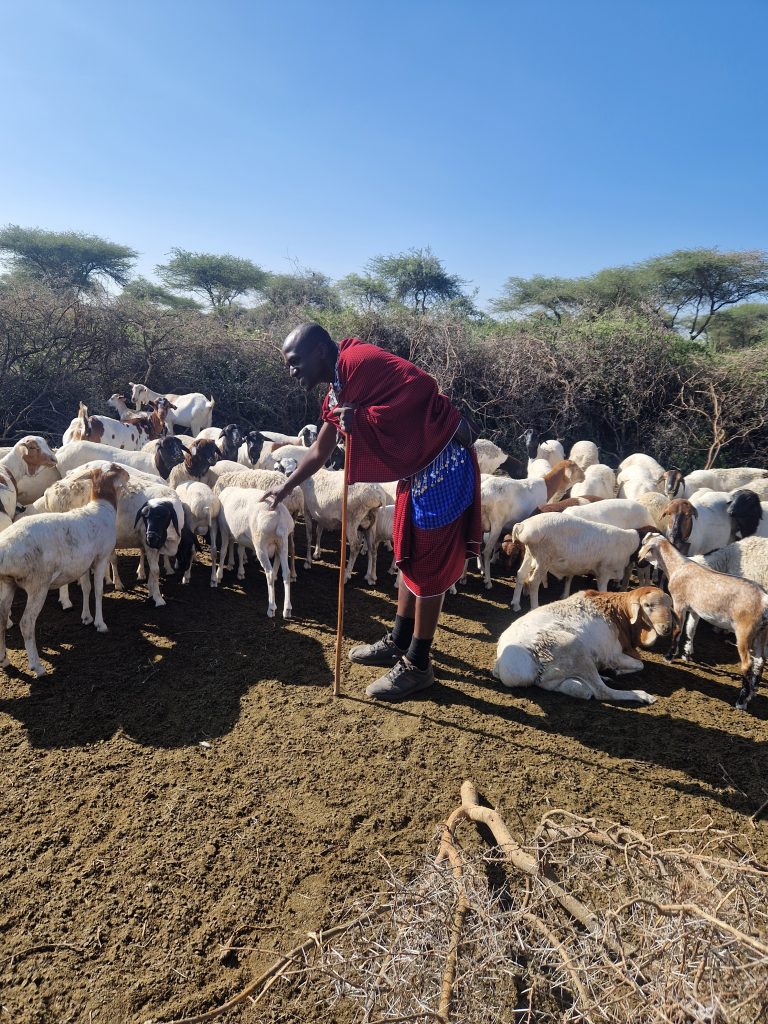
After checking the health of the animals, we had to go out with them in search of pasture. On the day of my initiation, we carried drinking water in a gourd calabash and something to eat. This exceptional measure was taken for me, as my guide was unsure how well I would endure walking behind the herd, under the sun, in an environment unfamiliar to me.
Along the way, he explained the three essential elements of a Maasai herder’s nutrition when he is out with his herd: water, milk, and blood.
Water Is Life
He simply told me: walking with the herd is demanding, and the herder must stay hydrated to remain healthy. I understood this very quickly, because the calabash of water we carried emptied sooner than expected—I was extremely thirsty.
My guide explained that, through generations of experience, Maasai herders know exactly how to ration their water intake. Furthermore, as they move with the herd, they head toward areas where they know there is a water point, where both the animals and the herders can drink.
Milk Is Life
In addition to the water they find in nature, my guide explained that the other staples of Maasai herders’ nutrition are milk and blood extracted from their own animals.
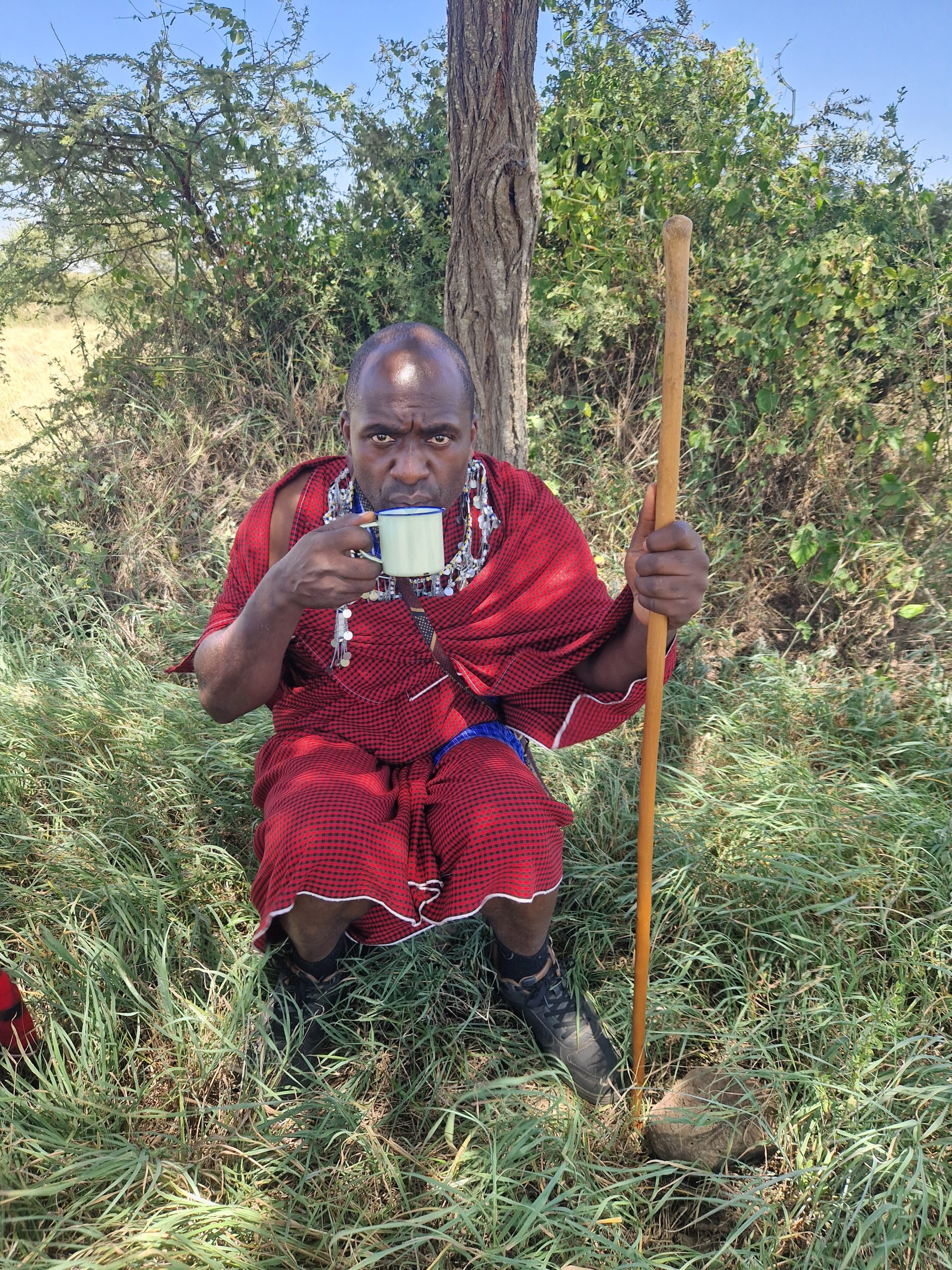
During the walk, there comes a moment when the herder feels hungry. He selects the animal he believes is in the best condition to provide high‑quality milk, milks it, and mixes the milk with blood to feed himself. This is one of the reasons why herders carefully check the health of their animals every morning.
Blood Is Life
My guide also explained that Maasai herders possess a technique—passed down through ancestral wisdom—that allows them to extract blood from an animal without killing it. A Maasai herder knows how to perform this technique because he knows the animals of his herd deeply. He knows which animal can give which quantity of blood without endangering its life.
The warm blood extracted from one animal is then mixed with warm milk from another, creating a nourishing meal that gives the herder the energy needed to care for his herd.
I cannot offer a deeper description of this practice because I received exceptional permission to bring prepared food. I therefore did not consume milk or blood during our walk that day, even though I wished to live the full experience as my Maasai brothers do.
However, my guide explained that this practice expresses a profound interdependence between the herder and the herd. According to him, the herd cannot exist as a herd without the herder, and the herder cannot remain a herder without the herd.
A Lesson in Leadership Sobriety
From the outside, one might think that the Maasai herder simply walks behind his herd. But when you live the experience from the herder’s perspective, you discover something else entirely.
Living and walking at the rhythm of the herd creates a powerful sense of detachment and freedom, while requiring bravery and deep responsibility.
One expression in particular made me reflect:
The Maasai herder is with his herd.
- He is not in front for the herd to follow him.
- He is not behind to push the herd.
- He is not on the side to control its movement.
During my initiation, I learned that the Maasai herder is where the herd needs him to be.
It is the need of the herd that directs his presence.
He knows:
- when to encourage slower animals,
- when to slow down the faster ones,
- when to bring back those trying to wander off, etc.
As I walked with the herd, I wondered how the experience of the Maasai herder could inspire new models of leadership in our society.
And you—have you ever had an experience similar to that of Maasai herders? Share your story in the comments.
#LeadershipDevelopment #CulturalIntelligence #IndigenousKnowledge #MaasaiCommunity #SustainablePractices #HumanNatureInterdependence #FieldExperience #Afrijohn #CulturalInsights #JeanDeDieuTagne