

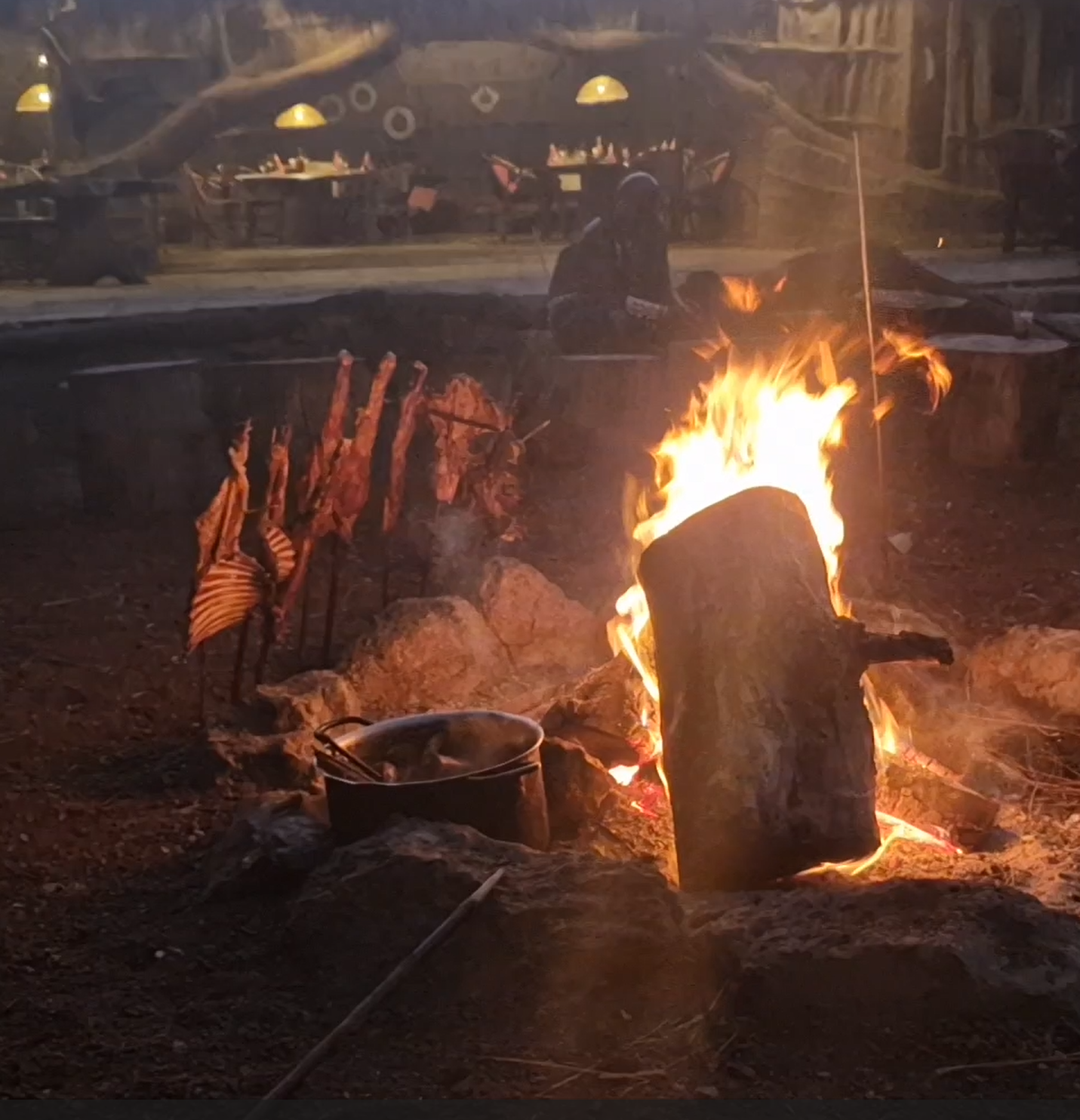
An intimate look at the Maasai communal meal ritual—an experience of sharing, trust, harmony, and social cohesion, where food becomes a symbol of community life rather than individual consumption.
My Maasai Initiation – Step 8: The Communal Meal
At the end of the dance, as daylight gave way to night, it was time to share the evening meal. This meal consisted of a soup made from medicinal plant extracts and mutton that had been slowly cooked over the fire since the afternoon. Although this Maasai meal had neither oil nor salt, it was incredibly flavorful.
Before we ate, an elder addressed the community, explaining that vegetable oil for frying and salt are considered by the Maasai to be elements that do not contribute to good health. Beyond the menu itself, two aspects of this meal deeply touched me: the sharing of the food and the communal meal.
Sharing the Meal
As we sat around the fire, four young Maasai stepped into the center to distribute the food.
For the soup:
- Two of them filled small clay cups,
- While two others walked around serving each participant in turn.
For the meat:
- Two young men cut the meat into small pieces,
- And two others distributed these pieces, with each person receiving three or four servings over the course of the evening.
During this process, I suddenly realized the profound social bond being expressed.
No one tried to take a larger portion for themselves.
The one cutting the meat did not do so to feed himself, but to give pieces to the distributor.
The distributor did not receive the pieces for his own hunger but solely to share them.
As for the participants, patience was required while waiting to be served, and gratitude was expressed with a “thank you” each time a piece was received.
The Communal Meal
Eating together is, without question, a powerful act of trust among people who share the same table. Among the Maasai, I understood that a meal is far more than satisfying hunger. It is an act of participation in the life of the community.
What matters most is not how much one eats, but the collective satisfaction experienced during this shared moment.
Since the parts of the sheep are distributed according to specific groups in the community, the communal meal becomes a way of understanding:
- who is present,
- what each category needs,
- and how differences are naturally accommodated without discrimination.
Some may eat a bit more, others a bit less—this is not seen as a problem.
On the contrary, it is a way of embracing and positively managing natural differences within the community.
And you—how is the moment of sharing a meal experienced in your culture? Tell us in the comments.
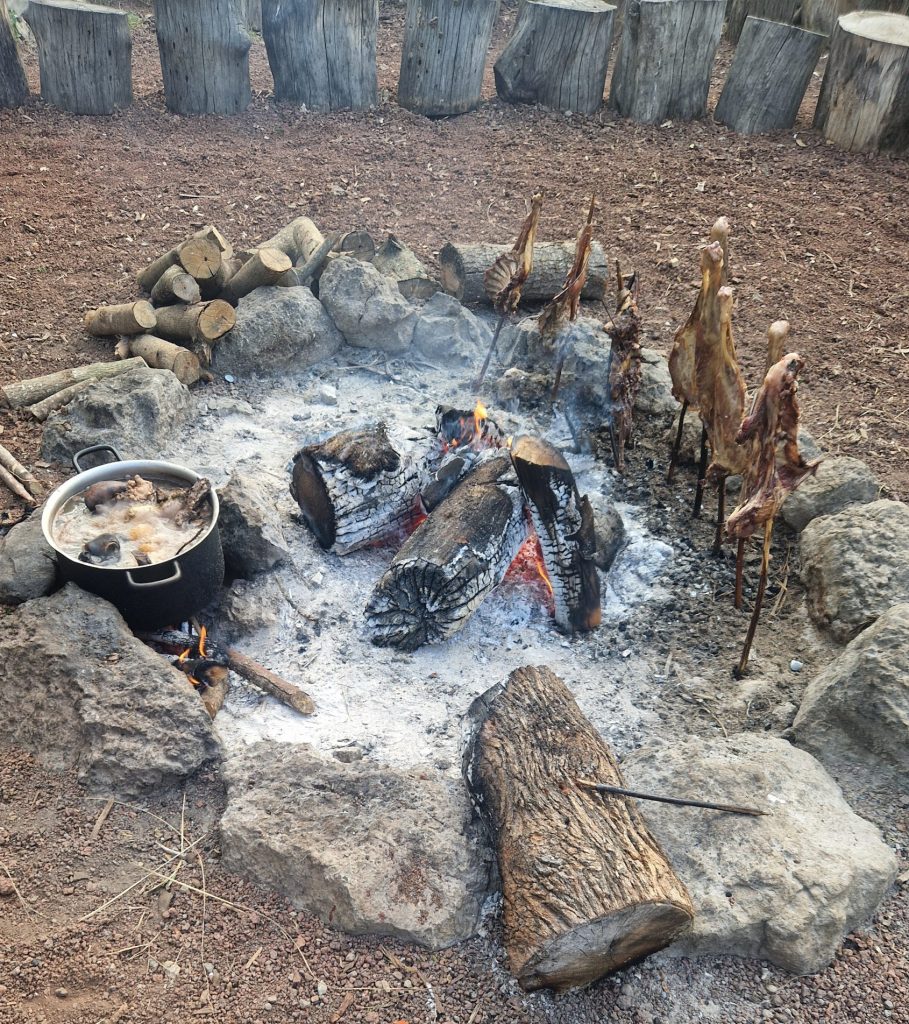
It was great to share the moment of joy and togetherness!